
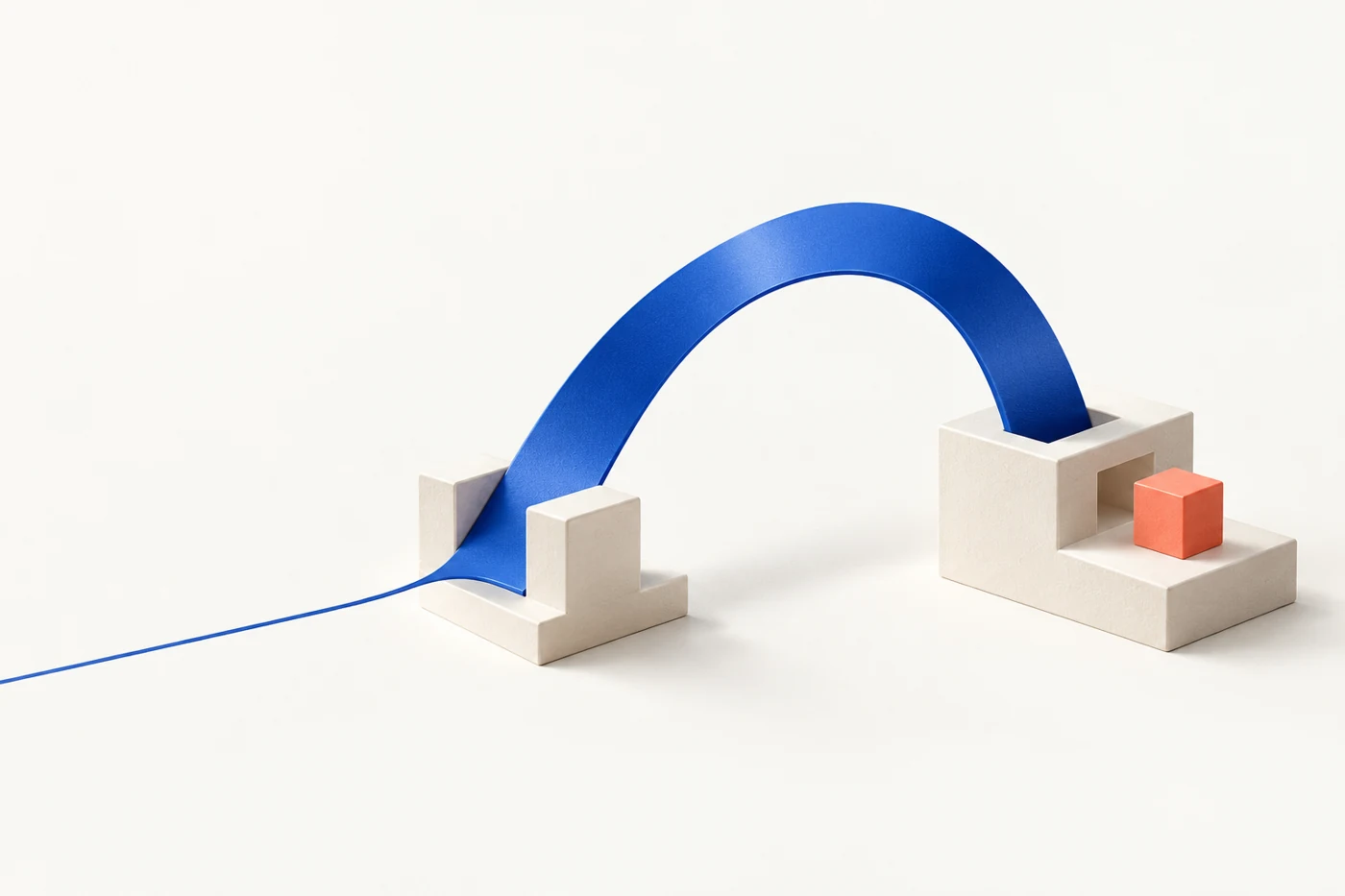
The reach and payload of a robot arm can be measured. Understanding which component an experienced worker picks up first, when they wait and how they recognise a correctly completed task requires a different kind of work. At GappAI, our attention is on the connection between physical capacity and this knowledge of a task.
This is a company perspective signed by GappAI. The approach described is not presented as the result of completed customer deployments. Its purpose is to explain where we aim to create value.
Where does the knowledge of work live?
Human expertise does not always fit into a procedure document. An experienced employee notices an object's orientation, changes a movement in response to slight resistance and distinguishes an ordinary situation from an exception. Transferring that knowledge to robots begins with understanding the task and how a good result is recognised.
For us, this puts the person who knows the work at the centre. The quality of demonstrations collected for robot learning should be defined with those people. Knowing when to stop or request assistance belongs to the task as much as knowing which behaviour to repeat.
A capability includes its limits
GappAI Skills aims to turn task knowledge into reusable robot capabilities. Describing the hardware, environment and conditions in which a capability has been evaluated is part of that approach. The Skill Library is a long-term product direction, rather than a claim that ready-made products already exist for every task. [1]
Consider placing a component. Reach, grippers and sensors differ between robots. Using a shared learned behaviour on a new system may require adaptation and renewed evaluation. The goal of reuse does not make physical differences disappear.
The engineering between a body and a job
A business needs to connect a robot's movement to a wider working system. The work order, physical action, result check and any human assistance are parts of one flow. In GappAI's application approach, digital steps complete that flow where the physical operation requires them. [2]
Success involves more than teaching a new movement. The movement needs to happen at the right time, connect to the right result and remain understandable to the people around it. A pilot should show how far that connection has been established.
Knowledge that can travel to the next task
If everything learned stays within its original project, the same problems may be solved repeatedly. Our long-term aim is to identify what tasks share while clearly separating site-specific conditions. Data, evaluation methods and application knowledge can then develop together.
The value of that knowledge cannot be measured by the size of a claim. A supportable task must be offered to a customer with a comprehensible scope. Our direction combines this working discipline with the goal of developing reusable products.
A robot's body is visible. The work that gives it a useful task is often less so. At GappAI, we want to make that work visible, measurable and capable of further development.
Sources & further reading
A publication of GappAI GmbH. Analysis, publisher perspectives and conceptual AI illustrations are identified as such.
Editorial team & standards · Report an errorContinue the conversation with GappAI.
Discuss your operation ↗