Deployment & integration
Robot adaptation, tooling, site setup, interfaces, safety controls, commissioning and acceptance testing.

Platform Layer / GappAI Workforce
Robots are assets. Useful, measurable operations are the product.
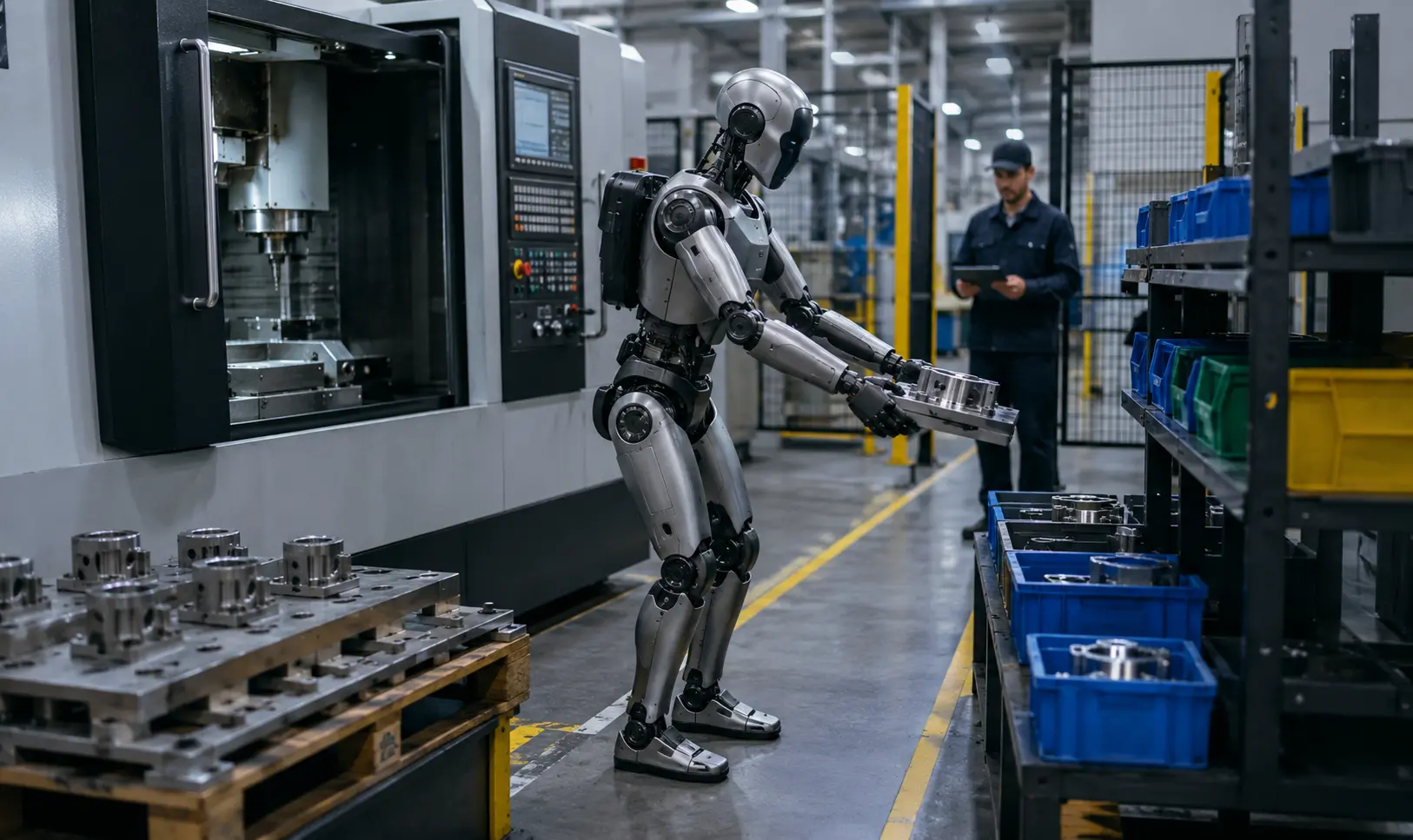
Robot manufacturers build machines. Operating organisations still need task intelligence, tooling, site integration, safety, supervision, recovery and performance improvement. GappAI is being built as this accountable layer between hardware and work.
Digital steps—such as work orders, task dispatch, access, system updates and reporting—are integrated where the physical operation requires them. They complete the robotic workflow; they are not a separate generic digital-worker product.
New operational capabilities begin with a paid Physical AI Pilot. Deployment services are contracted for supported configurations and evidence-backed operating boundaries. For hardware access, explore robot purchase and rental .
Robot adaptation, tooling, site setup, interfaces, safety controls, commissioning and acceptance testing.
Use of a versioned skill on agreed robots and sites, including the supported runtime, monitoring hooks and governed updates.
Performance monitoring, incident workflows, reporting, maintenance coordination and continuous-improvement releases.
Defined intervention, teleoperation or support coverage where the task, safety case and service design require it.
Robot access · Skills · Integration
From platform selection to task engineering and operational support. Purchase, rental or Robot-as-a-Service: the right model follows your task, supported hardware and validated operating conditions.
Plan your robotic workforce AI & Robotics EngineeringGappAI GmbH · Berlin
GappAI does not require the customer to buy one named robot brand. The task and operating evidence determine the supported hardware and commercial structure.
The customer owns the hardware. GappAI licenses and adapts the skill and provides deployment, monitoring and performance services.
An OEM, integrator, lessor or other partner supplies the assets. Responsibilities and interfaces are defined across the deployment contract.
Where validated demand, hardware access and financing support it, GappAI can structure an integrated service around availability, capacity or completed work.
04 / The complete operating lifecycle
Capture → Compile → Validate → Deploy → Operate → Learn. The target architecture connects data, skills and operations through explicit handoffs. Every new version must meet its release criteria again.
Define operating boundaries and success criteria. Capture expert work, instrumented demonstrations, human corrections and permitted operational data.
Output · Purpose-bound task evidenceRepresent the work as a Work Graph. Prepare training data, develop the Skill Core and configure robot adapters.
Output · Versioned skill candidateUse simulation and physical tests against agreed criteria. Record performance, interventions, failure cases, safety and recovery in the Skill Passport.
Gate · Review evidence and limitationsCalibrate on site; integrate work orders, machine handshakes and relevant customer systems. Define acceptance, responsibilities and fallback procedures.
Output · Approved site configurationMonitor quality, throughput, interventions and incidents. Human escalation, safe stops and maintenance coordination belong to the agreed operating service.
Output · Measured robotic workAnalyze approved outcomes and corrections. Develop improvements offline and validate again before every new release.
Feedback · Evidence for the next versionLearning returns to Capture and Compile, not directly to live control. Human approval, revalidation and a rollback path govern the version change.
After suitable validation, contracts can measure accepted parts, successfully completed cycles, productive hours or available shift capacity. Quality thresholds, intervention coverage, exclusions and responsibilities are defined — not just the number of robots.
The exact model is scoped after pilot evidence. Contracts separate implementation work, reusable intelligence and ongoing operational responsibility so the customer can see what it is buying.
Defined operation, prototype, validation and production decision.
Robot and site adaptation, commissioning, safety and systems integration.
Per agreed robot, configuration, site or deployment scope.
Runtime, monitoring, version management, analytics and updates.
Contracted operational coverage, reporting and coordination.
Human intervention and specialist support where included in the service design.
Robot-as-a-Service or outcome-based pricing applies only where GappAI or an agreed fleet structure supplies the hardware and accepts the corresponding operating responsibility. Every commercial model is confirmed in writing.
The model is intended for operations with persistent need and a credible path from one bounded task to repeated use. Sector labels do not replace task-level evidence.
Material flow, assembly, inspection, machine tending and variable line-side work.
Cleaning, inspection, transport systems, maintenance and essential municipal operations.
Property operations, campuses, hotels, hospitals, airports and large managed facilities.
Safe, adaptable robotic services for routine physical work and independent living.
Technology company
Core software, skill systems, operational methods, customer relationships and fleet-management capability remain concentrated in GappAI.
Fleet capital
Prioritize customer-owned robots, then OEM or partner hardware and suitable leasing. Owned fleets or dedicated fleet financing follow only where validated performance, long-term contracted demand and appropriate financing support the commitment.
Customers can request a scoped, paid Physical AI Pilot today. Deployment, recurring licences and managed services follow only for configurations that achieve the agreed evidence and can be supported under a written contract. This page does not claim that GappAI already operates a general commercial fleet or that every illustrated task or robot is currently available.
One operation is enough to begin