Risk before capability
Define intended use, foreseeable misuse, hazards, operational limits and acceptance criteria before scaling autonomy.

Safety / Responsible robotics
Safety is a system property—not a final checklist.
For robots operating around people, safe behaviour depends on hardware, controls, perception, learned policies, human oversight, operating procedures and the environment. We design these layers together and evaluate them throughout the lifecycle.
Compliance requirements differ by product, role in the supply chain and intended use. GappAI will classify each system and deployment individually, document the applicable obligations and involve qualified conformity and legal specialists where required.
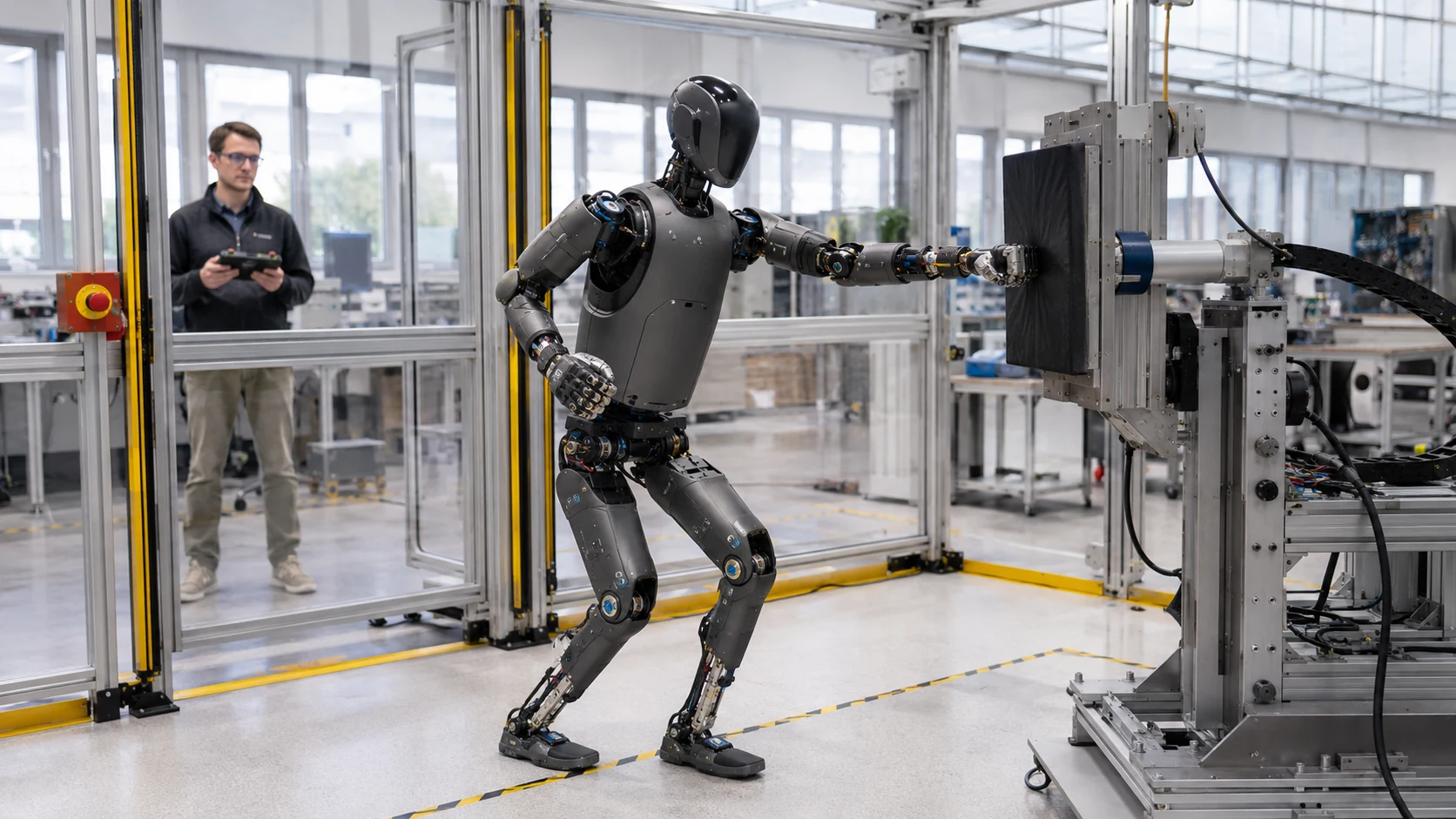
Define intended use, foreseeable misuse, hazards, operational limits and acceptance criteria before scaling autonomy.
Use clear operating states, intervention paths, safe stops and escalation rules appropriate to the task and environment.
Evaluate success, failure, recovery, latency and uncertainty under representative—not only ideal—conditions.
Separate training, validation and deployment; version models and data; gate updates before they reach operations.
Minimise personal data, establish a lawful basis, control access and retention, and protect recorded human demonstrations.
Maintain technical documentation, decisions, test evidence, incidents and changes across the system lifecycle.
Our compliance map is use-case specific. The following instruments form the baseline we expect to assess for relevant GappAI systems and deployments.
Risk classification, data governance, technical documentation, transparency, human oversight, accuracy, robustness and cybersecurity where applicable.
EU Machinery Regulation 2023/1230Safety and conformity obligations for machinery and related products; generally applicable from 20 January 2027.
ISO 10218-1:2025 / ISO 10218-2:2025Industrial robot and robot-application safety, including inherently safe design, integration and risk reduction.
Collaborative and service robotics standardsRelevant standards may include ISO/TS 15066 and ISO 13482 depending on robot class and intended application.
GDPR and EDPB guidanceLawful, proportionate and secure processing when cameras, sensors or demonstrations involve identifiable people.
Intended use, legal role and risk profile.
Limits, safeguards and human control.
Tests, simulation and representative trials.
Controlled scope and trained operators.
Performance, incidents and managed change.
Planning a safety-critical or public-sector use case?